Pastoralism in India
Overview
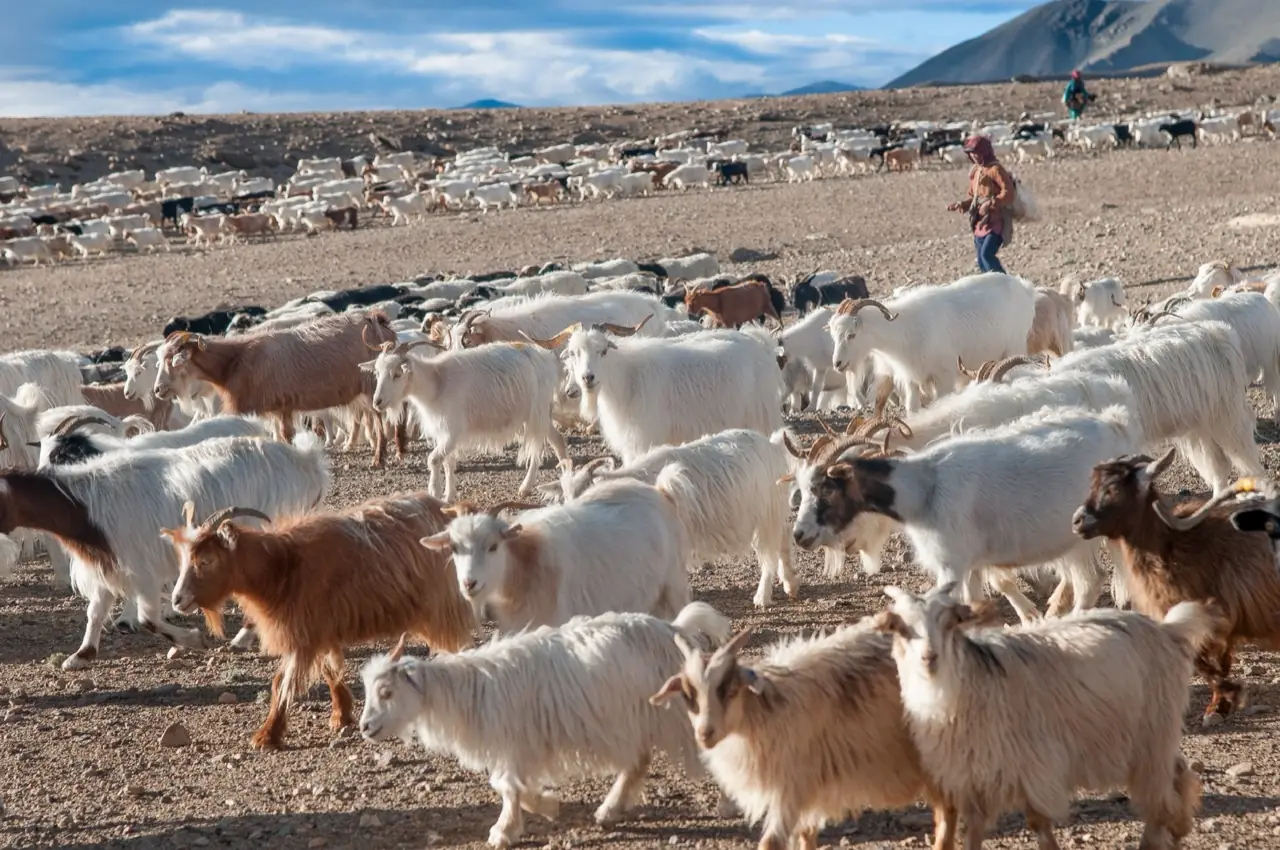
An estimated 10–12 million pastoralists manage close to 30% of India's livestock — a bewildering array of species: sheep, goats, cows, buffaloes, camels, yaks, donkeys, horses, pigs and ducks. More than 60 distinct pastoral communities keep these animals, across almost every state in the country.
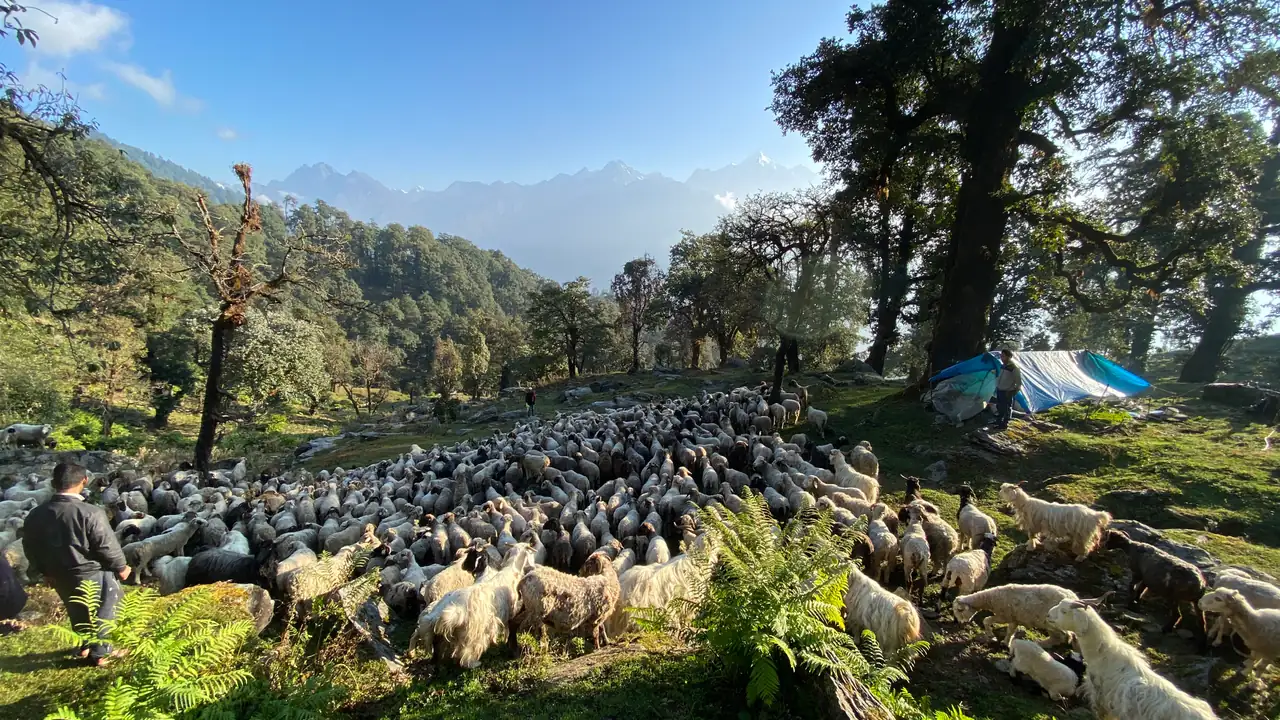
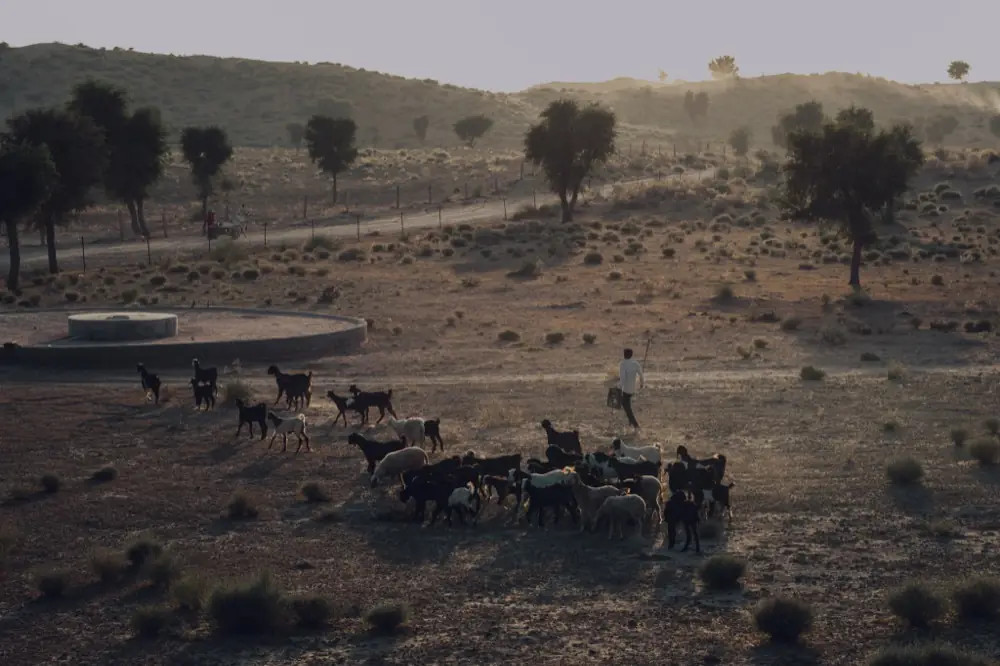
The logic of pastoral mobility differs across these geographies, shaped in each by distinct ecological conditions and different drivers of herders' decisions. None of it is aimless wandering, the classical trope that has defined state writing on pastoralism for the past two centuries. In the Himalaya, herders graze along an elevational gradient, moving up to higher pastures in summer and down to the plains in winter. In the arid and semi-arid regions, mobility is a response to rainfall variability and the accompanying seasonality of agriculture.
523 Million
Livestock Census Population
(20th Livestock Census, 2019)
160 Million
Estimated Pastoral Livestock
Field Notes
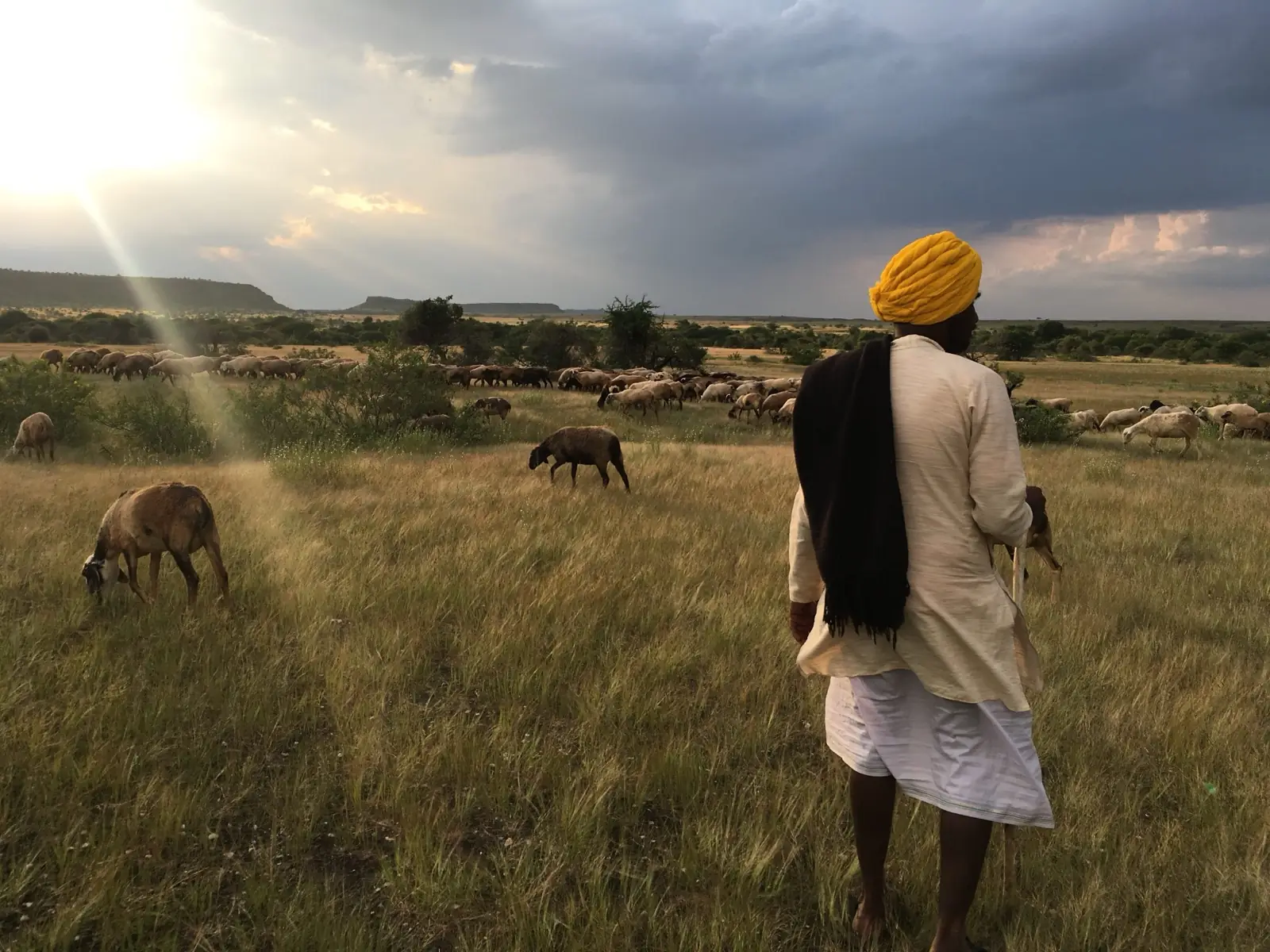
Traditional herding practices maintain critical ecosystems and keep animal breeds resilient across diverse ecological zones.
As "keepers of genes", they are responsible for developing more than 40% of India's domesticated animal diversity. Their herds graze close to 35% of the landscape, and they contribute significantly to India's meat, dairy, wool and dung economies.
Livestock Managed by Pastoralists
Total population in thousands
- Cattle
- Buffalo
- Sheep
- Goat
- Camel
- Yak
- Mithun
- Total Livestock
Source: Indigenous Livestock Census · Pastoral Holdings Survey · 20th Livestock Census 2019
Sheep: The Ambassador of Pastoralism
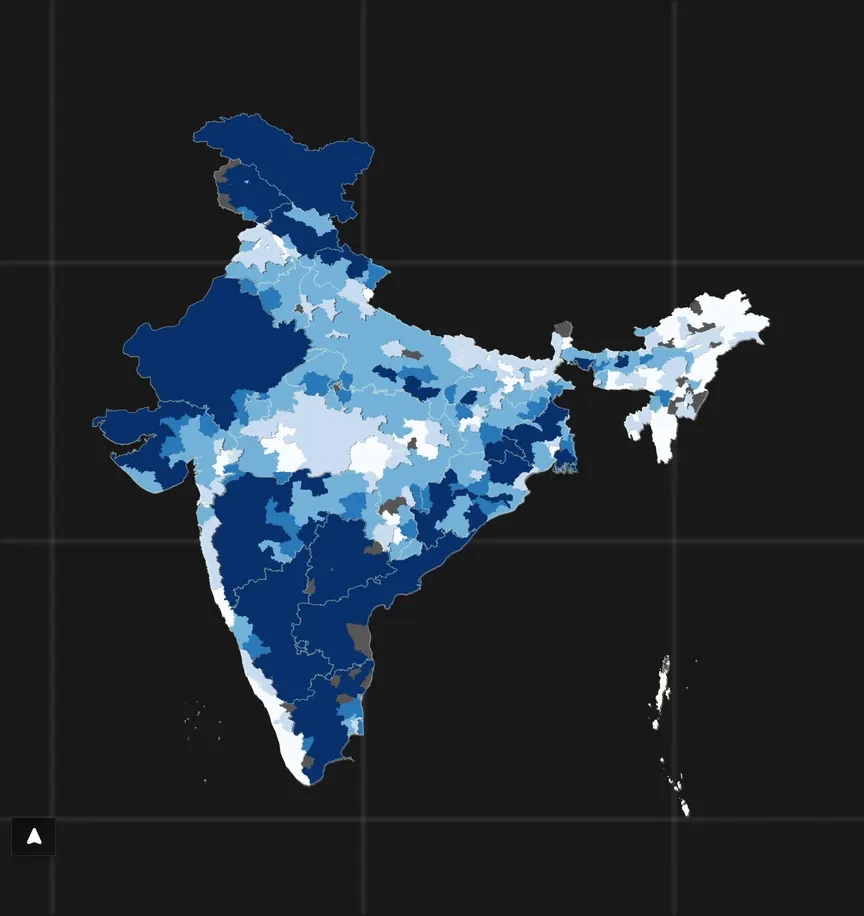
India has an estimated 75 million sheep, the second-highest population of sheep in the world. On account of their foraging needs, sheep tend to need access to the open range and are not stall fed. As a result, the vast bulk of India’s sheep are managed by pastoral communities. On account of the large numbers and the presence of sheep in all pastoral regions in the country, we use the distribution of sheep as a proxy to capture the core pastoral regions of the country, the Himalaya, the Arid West and the Semi-arid Deccan.
Sheep Population Density LegendLIVESTOCK CENSUS 2019
- 0 - 500
- 500 - 5,000
- 5,000 - 50,000
- 50,000 - 100,000
- 100,000 - 1Cr
About the Project and Timeline
About the Project
There is, remarkably, almost no cartographic representation of pastoralism in India, and we believe this is a gap that needs to be filled. Despite decades of research on pastoralism across the world, India remains underrepresented in global accounts of the practice. This discrepancy was evident in a 2007 World Initiative for Sustainable Pastoralism report, which featured only small pockets of pastoralism in India, far from the reality on the ground.
Accurately representing pastoralism in India, however, poses challenges due to the lack of precise data on pastoral communities and their livestock ownership. Recognising this gap, the Centre for Pastoralism embarked on the Atlas project in 2021 to develop a methodology for mapping pastoral land use and documenting its scale and spread across the country.
The project began with an exploration of methods to collect and cartographically represent pastoral mobility, while documenting the narratives surrounding contemporary pastoralism. Over time, this work has expanded across multiple pastoral landscapes, bringing together field research and mapping to build a broader picture of pastoralism in India.
The Atlas seeks to make pastoralism more visible through an evidence-based cartographic representation of its landscapes, mobility and livelihoods. Such representation offers a more effective and inclusive means of engaging with government, policymakers and civil society on pastoralist issues, towards greater dialogue, investment, recognition and support for pastoral communities.
Timeline
The atlas began in late 2021, with fieldwork starting in Himachal Pradesh in January 2022. Much of the first two years went into developing our methodology, working out how to collect migratory route information and represent it cartographically, even as the work began to spread: to Gujarat in the second half of 2022, and to Uttarakhand and Ladakh from 2023. Mapping reached Arunachal Pradesh and Maharashtra in 2024, and Rajasthan in 2025. By 2029 we hope to add Jammu and Kashmir, Sikkim, Karnataka, Andhra Pradesh, Telangana, and Tamil Nadu, completing coverage of every state that makes up India's three major pastoral regions.
The atlas grew out of an effort to map something that, in India, had been known mostly through anecdote and scattered evidence: the seasonal movement of herders with their animals. We work region by region across the three landscapes where mobile herding is concentrated—the Himalaya, the arid west, and the semi-arid Deccan. We cannot sample populations in an attempt to generate maps that are representative of pastoralist distribution across a region. Instead, we have used a combination of opportunistic snowball sampling and key informant based purposive sampling to identify and interview herders, sometimes snowballing from one interview to the next, and at other times using key informants to identify pastoralist households.
Our aim is to ensure that we cover all pastoral communities within a state and, as far as possible, all geographies used by pastoralists. The resulting maps therefore reflect the intensity and reach of our sampling, rather than providing an accurate representation of the distribution or density of pastoralists across a geography. The Atlas, provides a sense of the scale and spatial spread of pastoralism. We see this as a first step towards understanding the extent and diversity of pastoralism within a region.
Within each community we document the routes herders travel and the sites that structure their year—grazing areas, night halts, and water points; places for veterinary care, shearing, and milking; the markets and points of sale for pastoral produce; tenure arrangements and access; issues faced and the herder settlements themselves. The atlas is built with herders rather than only about them. In semi-structured interviews, they identify the routes they travel and the places that matter along them, and this knowledge is recorded on the spot.
At first, locations were noted by name on paper based questionnaires and georeferenced after the interview, which produced entry errors, mismatches with mapped place-names, and duplicate records that were tedious to reconcile. We then built a digital tool on the Open Data Kit (ODK) protocol to move beyond paper forms and collect information at scale, but because locations were still georeferenced after the fact, those inconsistencies persisted. We now use Mergin Maps, an open-source application on which surveyors place each location directly onto a base map on a tablet, and which works offline in remote areas without a signal. Running alongside the mapping, a structured questionnaire captures the economics of herding at the household level—income, expenditure, herd composition, and animal losses.
Data cleaning required place-names be standardised against mapped entries, and datasets are cross-referenced to catch errors, duplicates, and gaps. The cleaned datasets are then analysed in QGIS and ArcGIS alongside land cover, elevation, and administrative, forest, revenue, and protected-area boundaries. These maps are read alongside the interviews, observations, and informal conversations gathered during fieldwork, which supply the context and narratives the maps alone cannot. To understand how pastoralism is changing, a separate strand of work looks closely at charting historical routes alongside current ones to understand how migration patterns have changed over time. Because pastoral movement is seasonal and negotiated, and shifts from one year to the next, we treat each route as a record of a practice at a moment in time rather than a fixed line on the ground.
CFP TEAM
Aischaryalaxmi Sahu, Adith Gopala Krishna, Aniruddh Sheth, Lakshit Sharma, Sarita Sundar, Shravya Omar, Vasant Sabrewal, Yash Ketkar
CARTOGRAPHY INTERNS
Shanehil Borah, Yashashshri Sharma, Tarun Kakarala
EX CFP
Anita Kusum Purty, Dhanush Ramasubramanian, Leo George, Vidur Dutt, Yashita Bajaj, Shital Sangewar
ATLAS BOOK DESIGN
Georgie Paul, Sarita Sundar
AFTR LABS
Mihir Keskar, Gaurav Singh
FIELD COORDINATORS AND SURVEYORS
HIMACHAL PRADESH
Field Surveyors - Abhinanda Lahari, Brij Mohan, Shammi
HIMACHAL GHUMANTU PASHUPALAK MAHASABHA (HGPM) - Avtar Singh, Rajkumar, Rohit Kumar, Rahul, Shreya Kumari, Madhu Kumari, Akshay Thakur, Rohit Kapoor, Nagraj, Aman Kapoor
Experts -
Akshay Jasrotia, Satyaprasanna
UTTARAKHAND
State Coordinator - Dhanush Ramasubramanian
Field Surveyors -
VAN GUJJAR TRIBAL YUVA SANGATHAN (VGTYS) - Aftab, Gulfam, Irshad, Mohammad Ishak, Mumtaj
Experts -
Ameer Hamza, Amanat Ali, Mohammad Shamshad
GUJARAT
State Coordinator - Yash Ketkar, Rohit Jha
Field Surveyors - Amadh Padeyar, Hamid Bakale, Kasim Node, Niyatee Pandya
Field Surveyors and Experts -
MALDHARI RURAL ACTION GROUP (MARAG) - Bhavana Desai, Karan Desai, Sailesh Raval, Suraj Desai
LADAKH
State Coordinator - Chamba Tsetan
Field Surveyors -
Kunzang Disket, Rigzin Yangdol, Stanzin Chorol, Tenzing Palmo, Tsering Chuskit
ARUNACHAL PRADESH
State Coordinator - Deepika Chhetri
Field Surveyors - Lobsang Jamba, Pempa Tashi
MAHARASHTRA
State Coordinator - Ajinkya Ukey
Field Surveyors -
Aman Sonwane, Ankush Mudhe, Arun Chaugule, Atish Jadhav, Atul Waditake, Bharat Pawar, Chintamna Balamwar, Chirag Jograna, Dnyaneshwar Sarvade, Eknath Gayakwad, Gaurav Hatkar, Hanumant Madane, Himmat Shelki, Kanta Waghmare, Mahesh Jadhav, Mahesh Pingle, Mohan Mengal, Om Kolpe, Pravin Hatkar, Raghu Borhade, Rahul Pawar, Rukmaji Gingine, Rushikesh Wagh, Sarang Yeole, Shashikant Kajgunde, Shriam Anyanr, Sopan Dukare, Umakant Sonale, Vijay Hake
Experts -
CENTRE FOR PEOPLE’S COLLECTIVE - Sajal Kulkarni, Ajinkya Shahane
ANTHRA - Nitya Ghotge
RAJASTHAN
State Coordinator - Ravindra Singh Rathore
Field Surveyors -
Anoop Panwar, Azij Khan, Bhajan Lal Bishnoi, Daulat Ram Bairwa, Joga Ram, Kailash, Magan Verma, Manohar Lal Gadri, Masra Ram Devasi, Mohd Vasim Ansari, Mukesh Vaishnav, Parvej, Prabhu lal Meena, Prakash Gurjar, Pravin Kumar, Raja Ram Rebari, Ramkunwar Rahul, Rupesh Tyagi, Satyanarayan, Shiva Ram, Tarun Kumar, Veerendra Singh Rathore, Yogesh Kumar
Experts -
FOUNDATION FOR ECOLOGICAL SECURITY (FES) - Dimpal Kumari, Bhavana Roa Kuchimanchi, Shantanu Roy, Narayan Singh, Bandana Sambyal, Girdhari Lal Verma, Veena M, Harshit Mishra
KRISHI AVAM PARISTHITIKI VIKAS SANSTHAN (KRAPAVIS) - Sita Ram Verma, Anil Kumar
UTTARI RAJASTHAN COOPERATIVE MILK UNION LIMITED (URMUL) - Anshul Ojha, Moti Lal
LOKHIT PASHU-PALAK SANSTHAN (LPPS) - Hanwant Singh
Partners, Funders and Collaborators
PARTNERS
Himachal Ghumantu Pashupalak Mahasabha (HGPM) - Himachal Pradesh
Van Gujjar Tribal Yuva Sangathan (VGTYS) - Uttarakhand
World Wildlife Fund (WWF) - Ladakh, Arunachal Pradesh


FUNDERS
Azim Premji Foundation (APF)
Rohini Nilekani Philanthropies (RNP)
World Wildlife Fund (WWF)


COLLABORATORS
Maldhari Rural Action Group (MARAG)
Centre For People’s Collective (CPC)
Anthra
Foundation For Ecological Security (FES)
Krishi Avam Paristhitiki Vikas Sansthan (KRAPAVIS)
Uttari Rajasthan Cooperative Milk Union Limited (URMUL)
Lokhit Pashu-Palak Sansthan (LPPS)





Centre for Pastoralism

New Delhi
96, Anupam Apartments
Mehrauli - Badarpur Rd
Saket, New Delhi
Delhi 110068

Sahjeevan
Bhuj, Gujarat
C/O Sahjeevan
175-Jalaram Society, Vijay Nagar
Hospital Road, Bhuj-Kachchh
Gujarat 370001