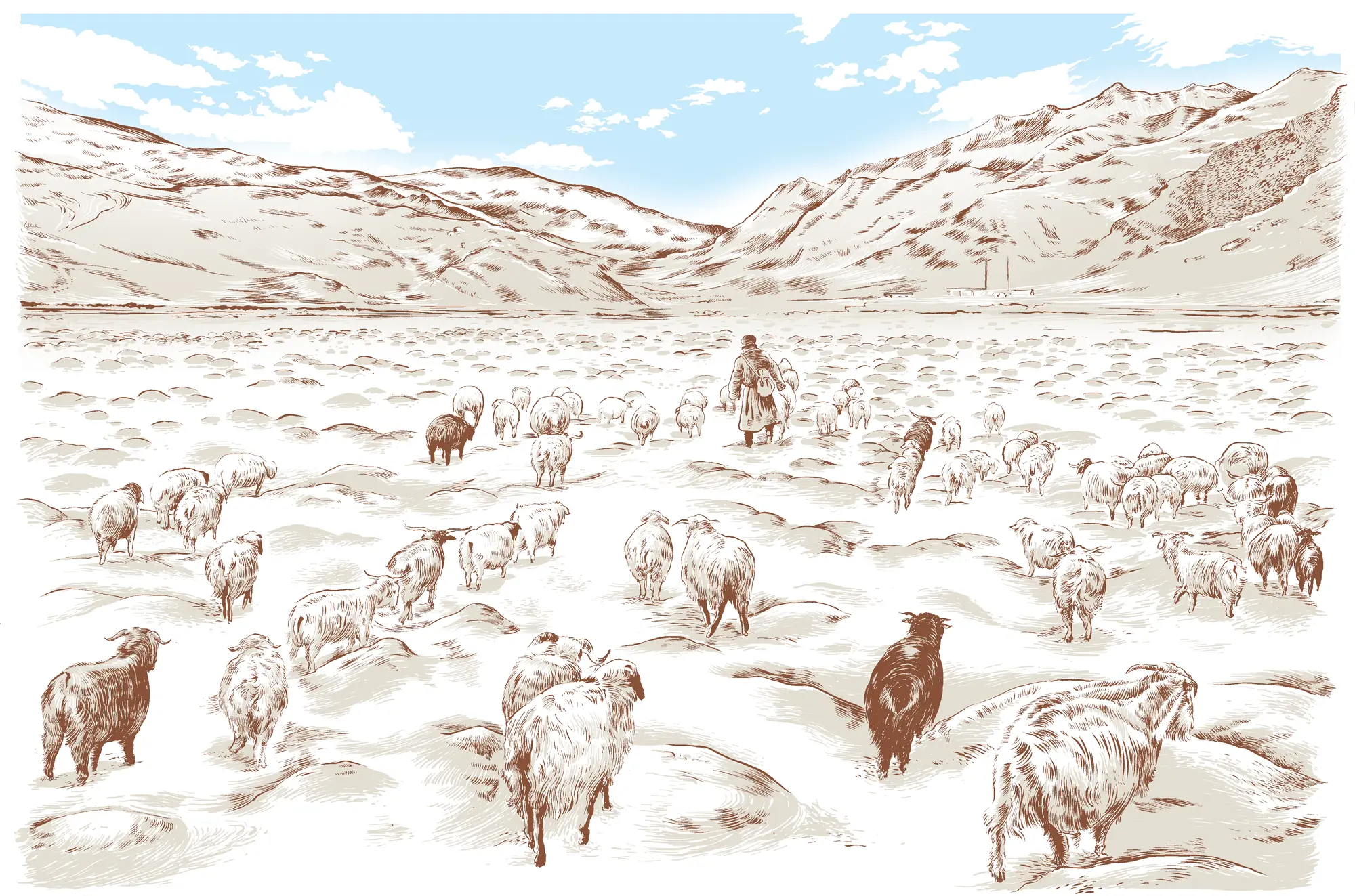
Mobility
Illustrations by Somesh Kumar, from World on the Roof.
Mobility
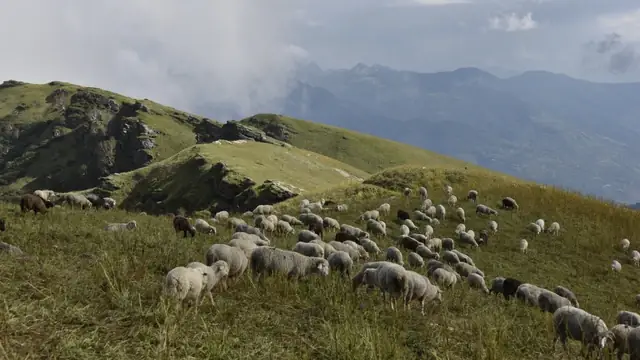
Mobility lies at the heart of pastoralism. Communities move their animals to take advantage of the seasonal availability of forage and water. They may move in response to drought, seeking out both forage and water; move to higher elevations in search of summer pastures, and to lower elevations to escape the onset of winter snows. They may also move in response to agricultural cycles, allowing their animals to graze on crop stubble while providing farms with much-needed manure. None of this movement is random, a common trope that portrays pastoralists as mindlessly wandering from place to place. Mobility can entail substantial costs, both financial and in terms of physical safety, and is therefore never undertaken casually. Instead, it is carefully planned and shaped by a nuanced understanding of climate, topography, weather and vegetation patterns. Pastoral mobility is, in other words, a deliberate strategy for managing animals and landscapes in environments where the availability of forage and water is constantly changing.
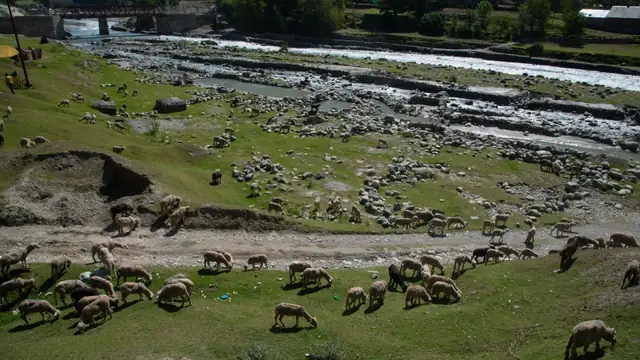 Mountain Pastoral RegionArunachal PradeshComing soon
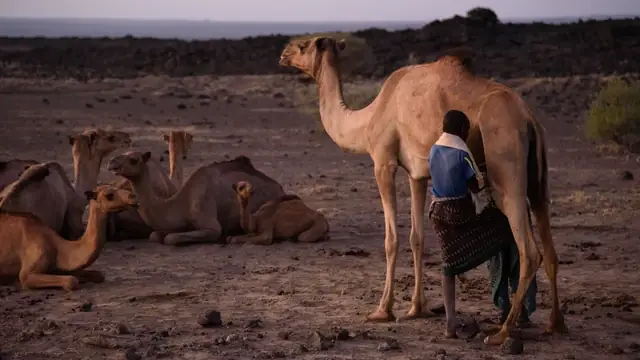 Arid Pastoral RegionGujaratComing soon
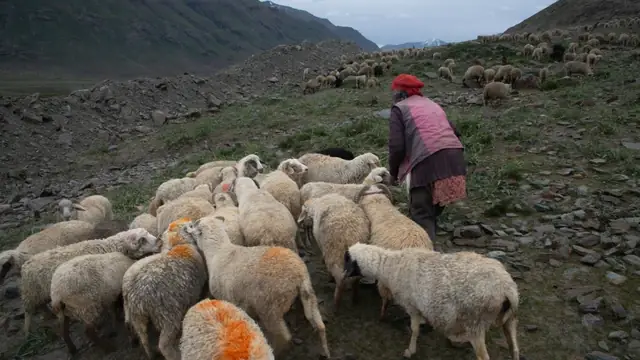 Mountain Pastoral RegionHimachal PradeshExplore More
- Semi-Arid Pastoral RegionMaharashtraComing soon
 Mountain Pastoral RegionLadakhComing soon
- Arid Pastoral RegionRajasthanComing soon
- Mountain Pastoral RegionUttarakhandComing soon